
How Can Sensory Play Benefit Language Development?
Exploring how hands-on sensory experiences help children develop vocabulary, communication, and storytelling skills
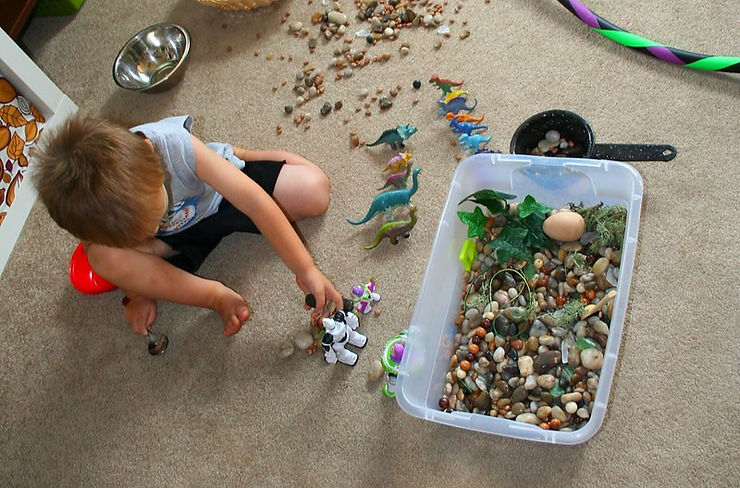
Language development is a crucial aspect of early childhood. The ability to communicate effectively is not just about learning words and grammar — it's about understanding and interacting with the world. Sensory play, one of the core elements of our Play Studio in Clonmel, plays a significant role in supporting and enhancing language development in young children.
The Role of Sensory Play in Language Development
1. Expanding Vocabulary Through Sensory Exploration
Sensory play is a powerful tool for building vocabulary. When children engage with different textures, sounds, smells, and sights, they are introduced to new words that describe these experiences. For instance, a child playing with a textured material like sand or playdough might learn words like "grainy," "smooth," "squishy," or "sticky." This hands-on exploration helps children understand the meanings of words in context, making it easier for them to remember and use these terms in conversation.
Sensory activities often prompt children to ask questions or make observations, encouraging them to use language to describe what they are experiencing. This natural curiosity is a driving force behind language acquisition, as children learn to articulate their thoughts and ideas more effectively.
2. Enhancing Communication Skills
Sensory play offers children various ways to express themselves, especially for those who may have difficulties with traditional forms of communication. For example, a child who is non-verbal or has a speech delay might initially use gestures, sounds, or expressions during sensory activities. Over time, as they become more comfortable, these non-verbal cues can evolve into verbal communication.
Activities that involve group play — such as building with blocks or playing with tuff trays — also encourage social interaction. Children learn to take turns, share materials, and collaborate, all of which require communication. Through these interactions, children practise using language in social contexts, which is essential for developing conversational skills.
3. Encouraging Descriptive Language and Storytelling
Sensory play can also be a catalyst for storytelling and descriptive language. When children engage in imaginative play with sensory materials, they often create narratives around their activities. For instance, a child playing with animal figures in a sand tray might invent a story about a jungle adventure. This kind of play encourages children to use more complex language structures, including descriptive adjectives, verbs, and sequencing words like "first," "then," and "finally."
By narrating their actions and the stories they create, children practise organising their thoughts and communicating them clearly. This not only boosts their language skills but also enhances their cognitive development by reinforcing the connection between language and thought.
4. Supporting Language Development for Children with Additional Needs
At Sensory Play Studio, we are dedicated to creating an inclusive environment where every child can thrive. We understand that neurodivergent children — such as those with autism, ADHD, or sensory processing differences — often have unique needs when it comes to sensory experiences. That's why we offer neurodivergent-specific sensory play classes, tailored to provide a supportive and unhurried environment where children can explore at their own pace.
The multisensory nature of sensory play helps to engage different areas of the brain, making it easier for children to absorb and process language. We tailor our activities to meet the individual needs of each child, ensuring they have the support they need to develop their communication skills.
Sensory Play at Sensory Play Studio
Our Play Studio in Clonmel is designed to be a language-rich environment where children can explore, learn, and communicate through sensory play. By using natural materials, high-quality early years resources, and repurposed items, we create engaging sensory experiences that stimulate both the mind and the senses.
Language development is a complex process that goes beyond merely learning to speak. It involves understanding, interacting, and expressing thoughts and ideas effectively. Sensory play provides a rich, engaging environment where children can develop these crucial skills in a natural and enjoyable way.
We're proud to offer sensory play experiences that support language development, helping children build the foundation they need for successful communication. Browse our classes or get in touch to find out more.
